Factory discussion package | Australian partnership proposal
01
Mutual Trust
Build a trusted first-tier brand through North Queensland field evidence, community credibility and locally supported serviceability.
01
The commercial prize
Australia offers a substantial recreational boating population and demand for electric trolling motors. Our opportunity is not simply to place another imported product on a shelf: it is to establish a brand that customers trust, with Australian repairs, parts and engineering feedback.
02
The addressable market
The 12V 65 lb test motor demonstrated 3.30 km/h on our 5 m boat; our normally operated 24V benchmark at setting 8 demonstrated 3.38 km/h. Both measured approximately 663 W at those operating points. This establishes a practical application benchmark, not a certified thrust rating for every hull. Market research should segment boat lengths, existing installations, motor age, new installation potential, and service demand. Every installed electric motor older than three years is a possible replacement prospect—not a guaranteed buyer.
Market evidence and volume model
Present boat registrations by length, fitted motor share, 3+ year installed fleet, new installations, replacement conversion and parts/retrofit opportunity separately. Do not treat all registered boats as prospective buyers. The quantitative proposal below uses known workshop demand and agreed planning milestones without inventing national fleet estimates.
Australian electric motor brands face an entrenched reputation hierarchy. Features and price alone do not create credibility. Nobody wants to buy a second-tier motor. In Australia, you’re either first tier or you’re third tier.
04
What we bring
Peter services approximately 1,000 electric motors each year in demanding North Queensland conditions and replaces more than 250 Minn Kota steering boxes annually. We have physically disassembled, tested and modified the product to remove foreseeable failure points. We are part of the northern barramundi fishing community; fishing and boating brands actively seek relationships with this community. It is not an industry we are trying to gain access to.
05
The performance evidence
The measured speed and battery-side electrical data below establish our tested 12V motor’s practical replacement capability for the way we use our current 24V motor. The existing 12V motor already performs this role; the R&D changes target reliability, serviceability and prevention of future warranty replacements.
Measured motor comparison — same 5 m boat
The normal operating comparison
Motor A setting 10: 3.30 km/h at ~663 W. Motor B setting 8: 3.38 km/h at ~663 W. Motor A attained 97.6% of the speed at essentially the same measured battery-side power. The Minn Kota is normally capped at setting 8 to avoid brush wear.
Boat speed by controller setting (km/h)
Motor A — 12V 65 lb (manufacturer withheld)Motor B — 24V Minn Kota reference
Battery-side electrical power (W)
Motor A — 12V 65 lb (manufacturer withheld)Motor B — 24V Minn Kota reference
Equivalent current at 24 V (A)
Motor A — 12V 65 lb (manufacturer withheld)Motor B — 24V Minn Kota reference
Setting
A km/h
B km/h
A (A)
B (A)
A (W)
B (W)
A @24V (A)
B @24V (A)
10
3.3
3.86
52.78
43.5
663
1135
27.63
47.29
9
3.2
—
—
—
—
—
—
—
8
3
3.38
37.01
25.3
471
663
19.63
27.63
7
2.7
3.06
25.53
18.4
329
484
13.71
20.17
6
2.4
2.57
17.26
12.8
225
337
9.38
14.04
5
2.1
2.41
11.48
8.4
150
222
6.25
9.25
4
—
2.25
—
4.9
—
129
—
5.38
3
1.5
1.61
2.19
2.7
29
71
1.21
2.96
Motor A manufacturer is intentionally withheld. This is observed on-water performance, not controlled laboratory thrust certification. Equivalent 24V current is battery-side power divided by 24; it is not measured current from a DC-DC converter.
06
Engineer the relationship
A locally trained, service-capable dealer network should support component-level repairs when customers arrive. Dealers can offer trade-ins, rebuild suitable used motors using MakoShark replacement parts and sell reconditioned motors. The second-hand resale benefit belongs to the dealer. MakoShark receives ongoing parts demand and field intelligence; Australian customers receive support without unnecessary whole-unit replacement.
07
Market-entry conditions
We will not enter the Australian market with the motor in its current factory assembly condition. Every mandatory engineering correction in The Spirit of Craftsmanship must be incorporated into an acceptable production design. We are asking the factory to rebuild the R&D-modified motor and agree the corrected production configuration.
“You can try by yourself and you will fail, or we can establish trust and make this succeed”
02
The Spirit of Craftsmanship
Thirteen documented engineering findings: preserve what is exceptional; correct what creates failure or prevents fast component-level servicing. The Spirit of Craftsmanship brings pride, care, ingenuity, dedication and personal responsibility to the quality of what we manufacture.
01
Brushless motor power connectors
Excellent — retain
The main power connectors routed down the shaft into the motor housing are the best we have encountered on an electric motor. Retain their design and production quality.
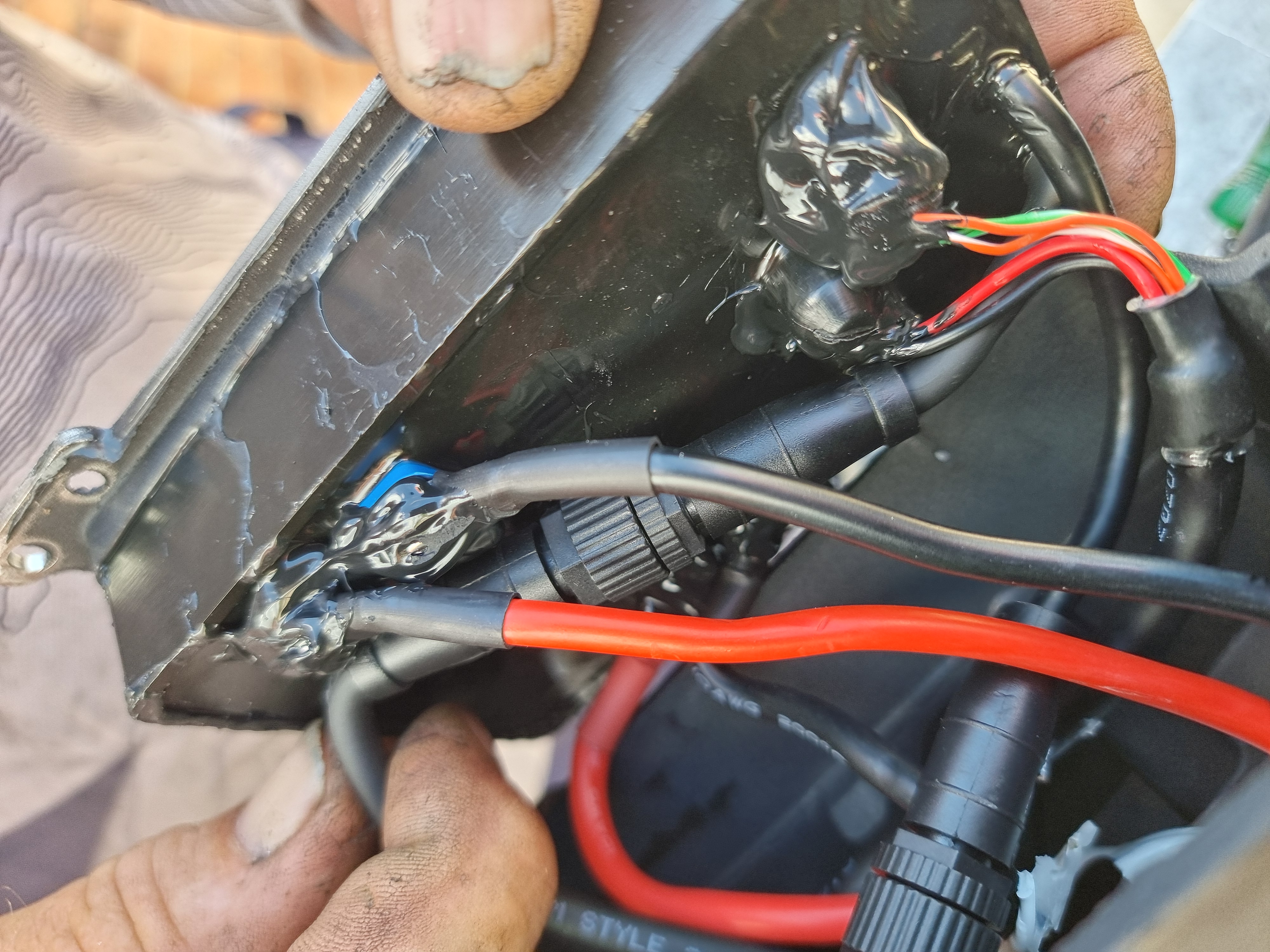
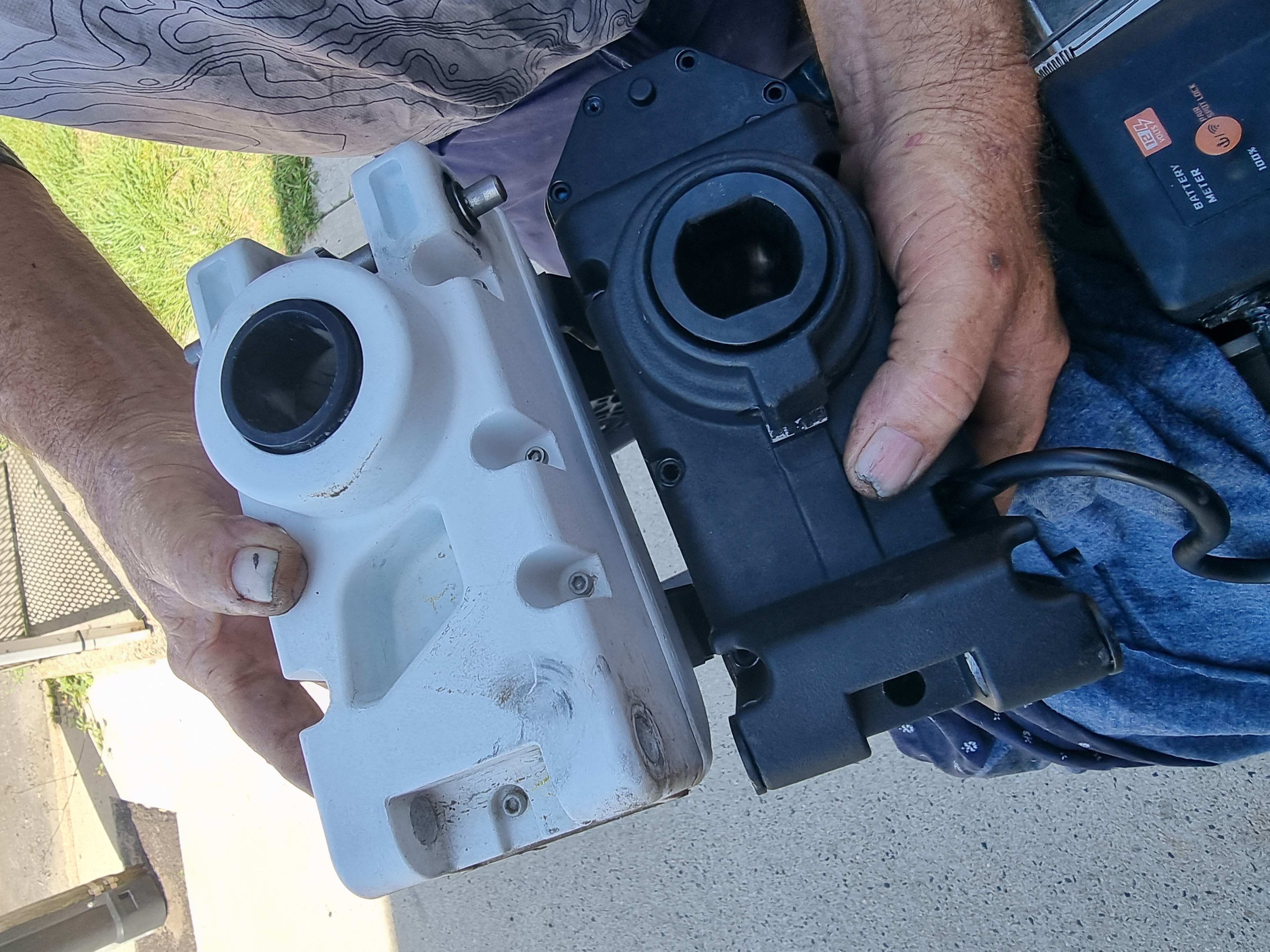
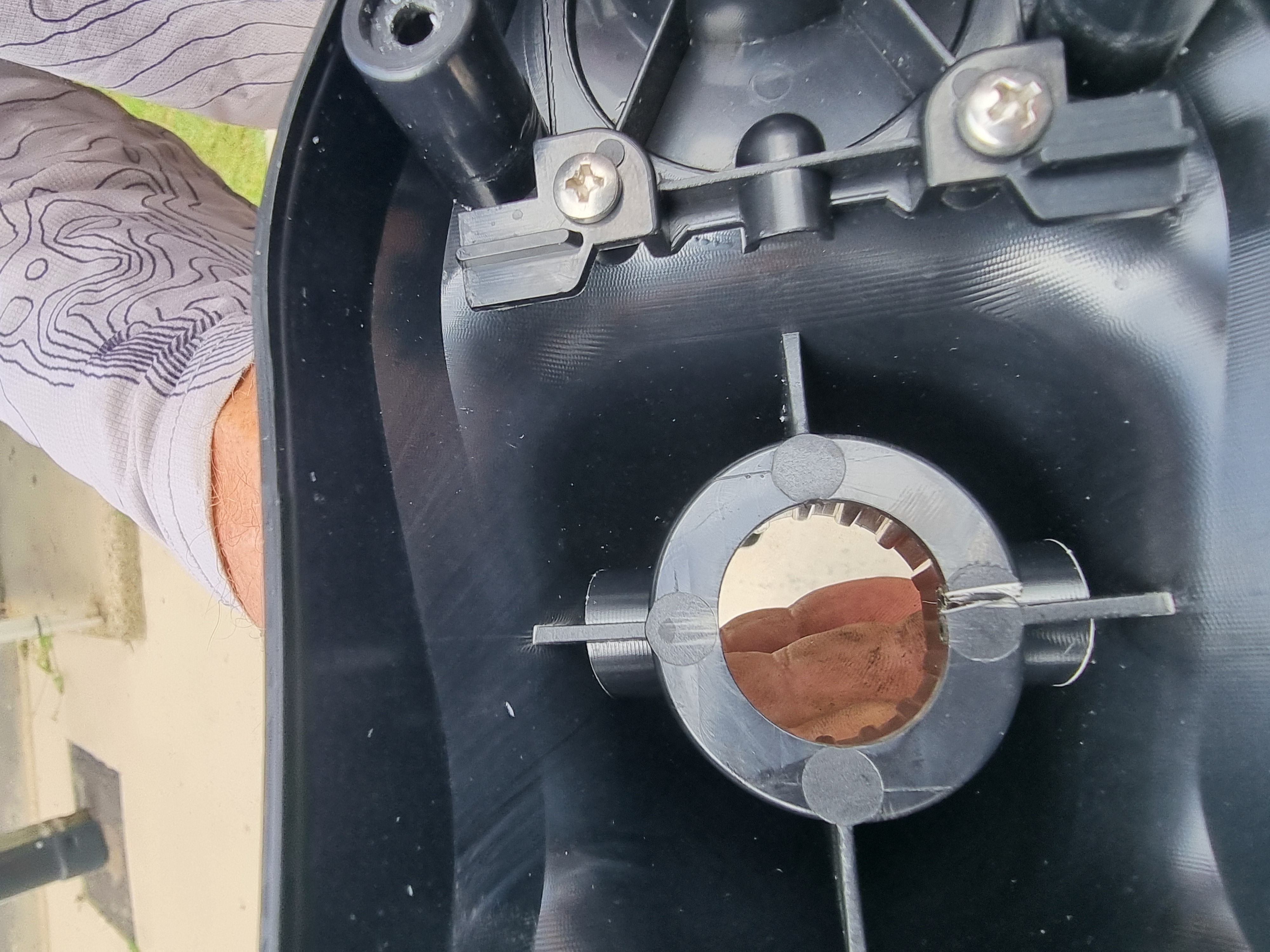
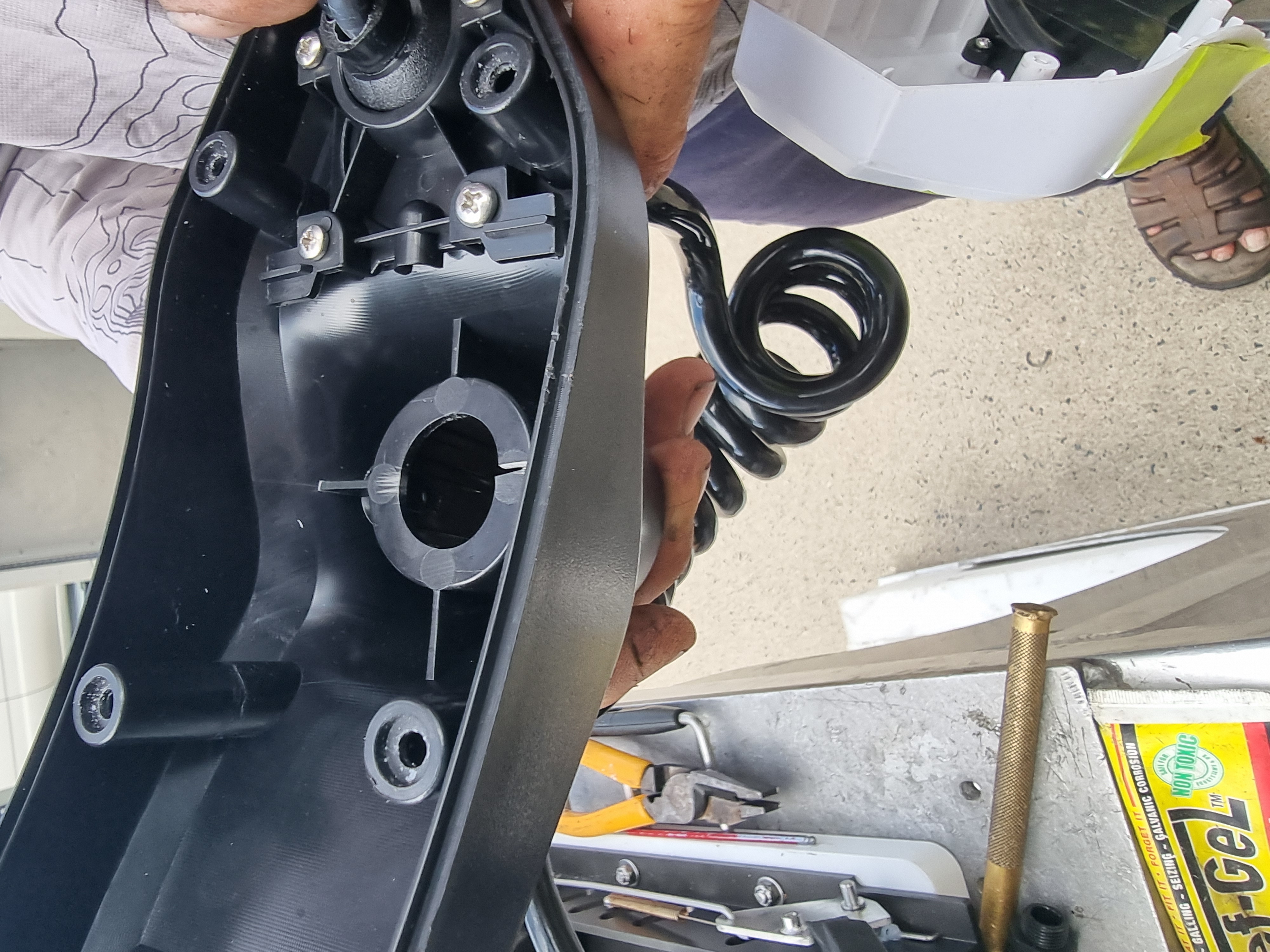
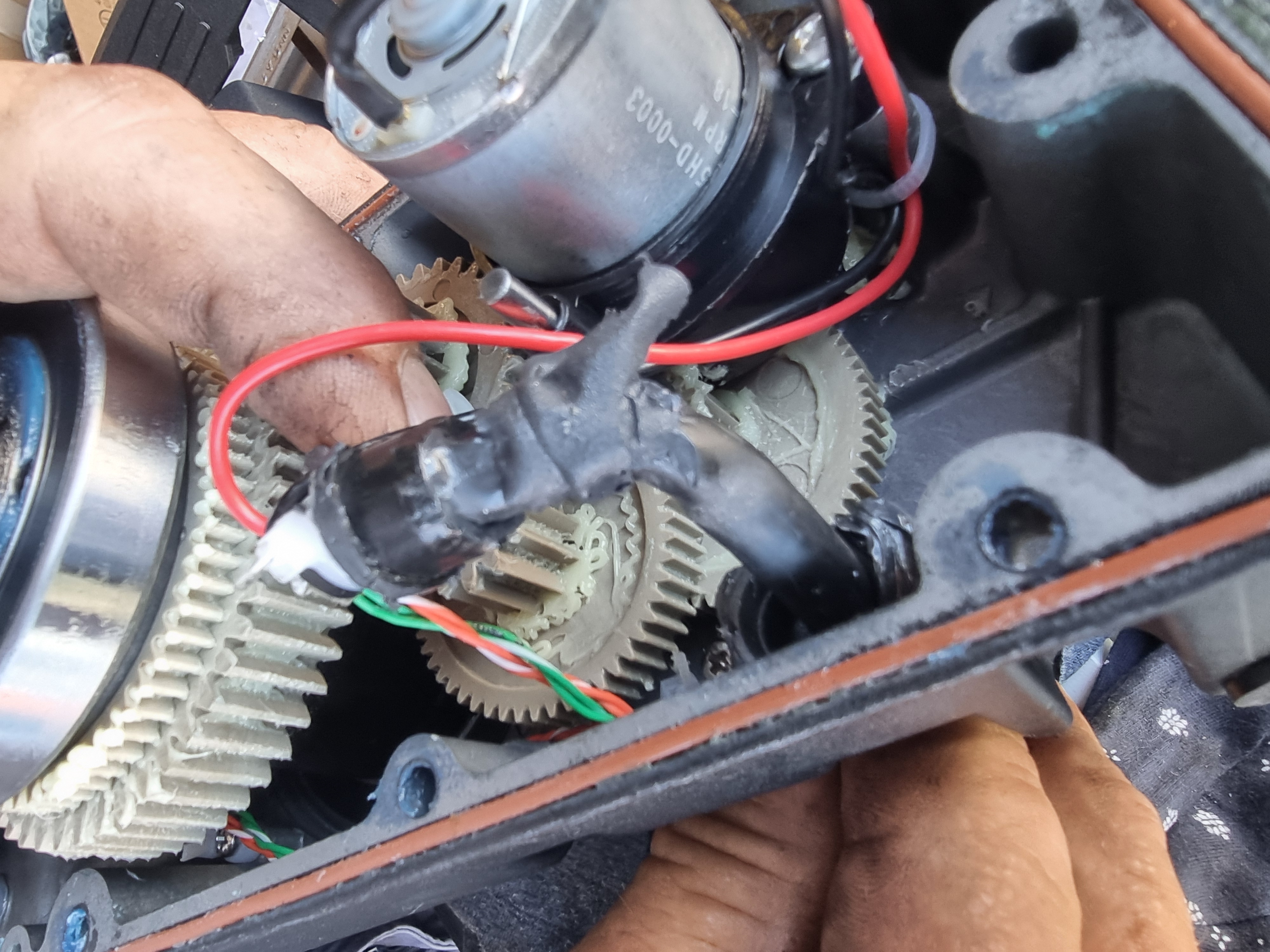
The mainboard and steering box are currently joined by a continuous cable, making them impossible to remove or replace independently.
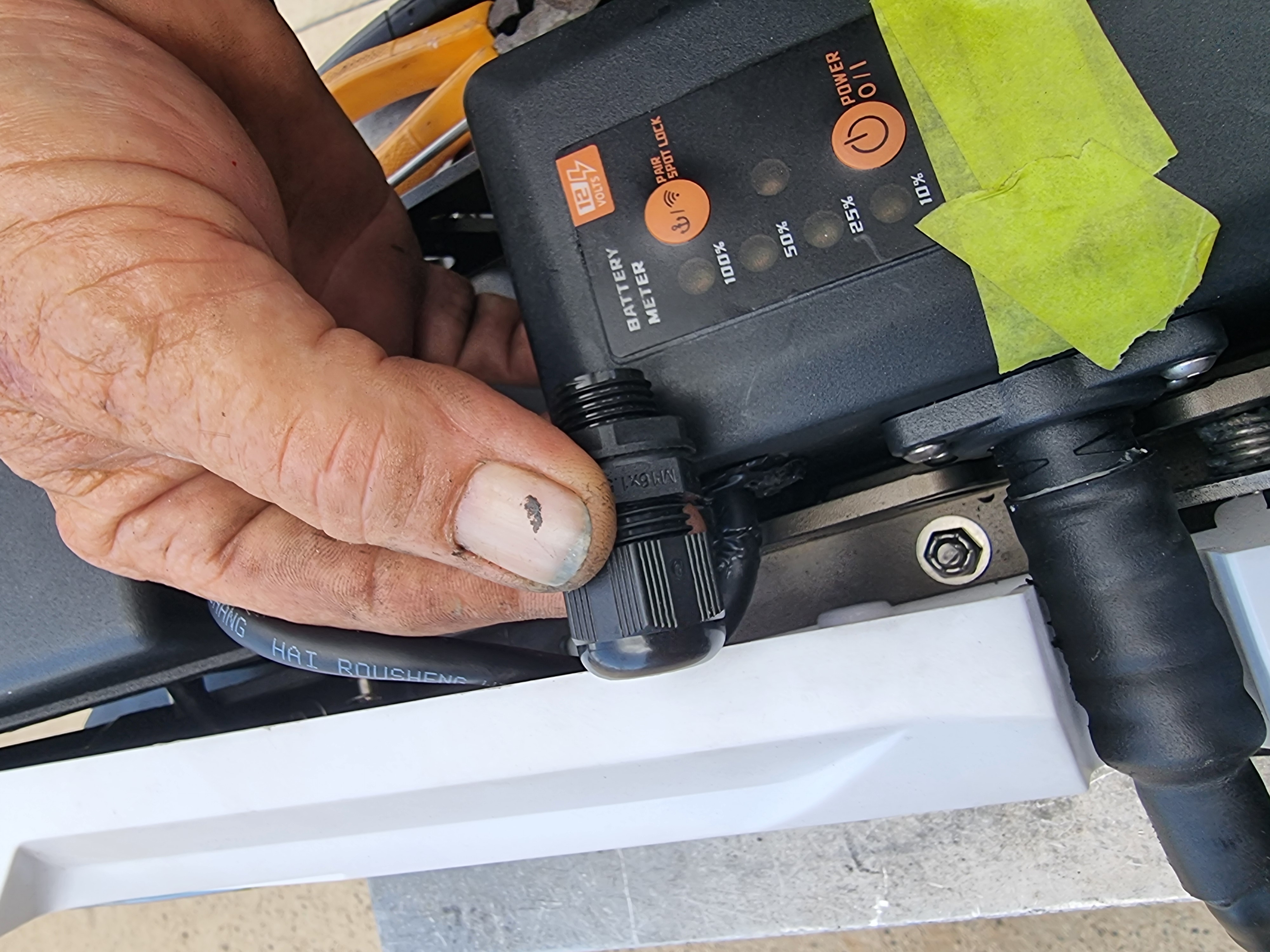
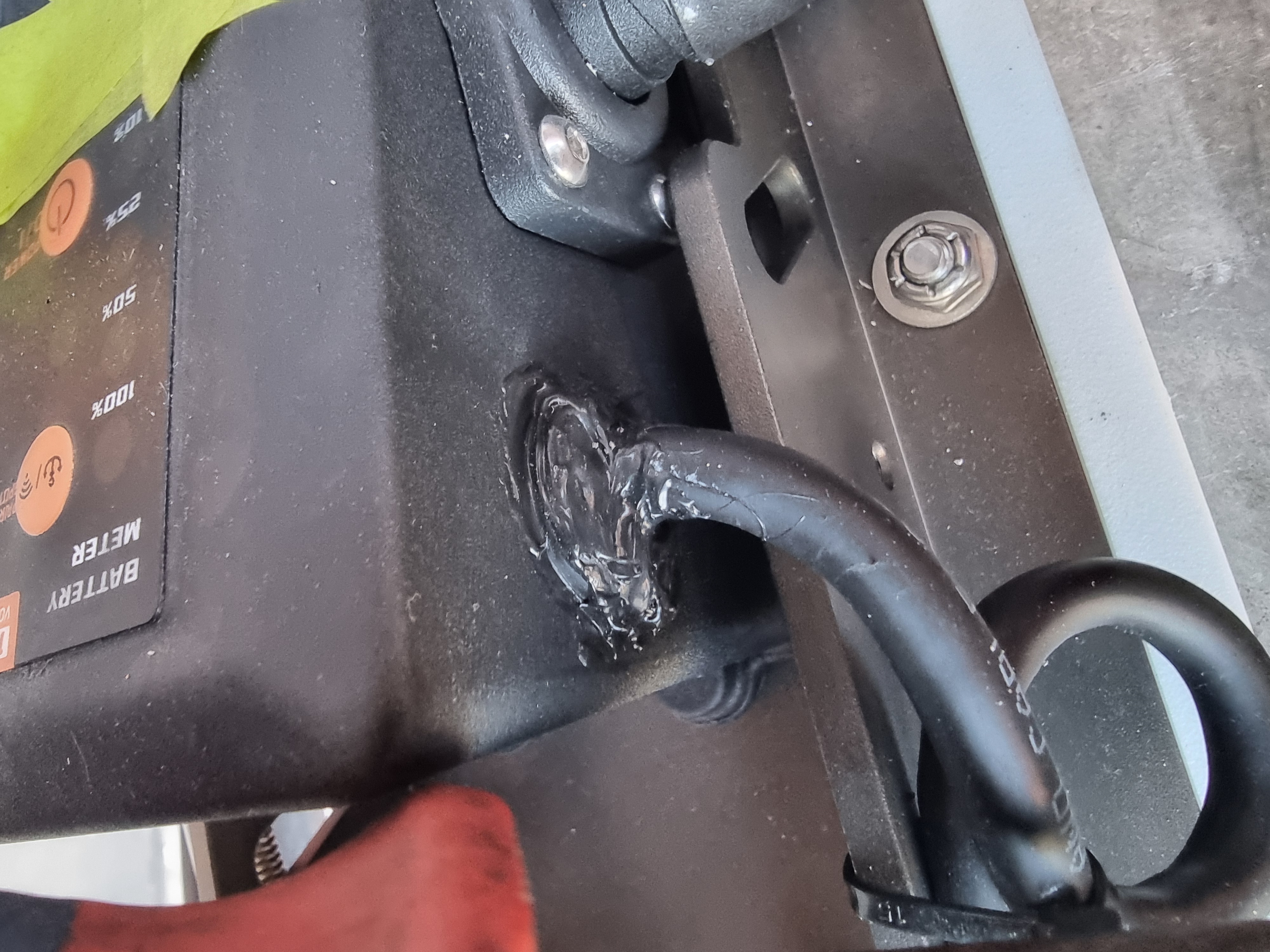
The cable entries were poorly sealed using cut rubber grommets and excessive sealing compound.
Both assemblies must have properly sealed, detachable connectors so either component can be replaced independently within five minutes.
The factory cut the original rubber grommets, pushed them into the cable openings and applied black sealing compound around the penetrations.
The electronic boards themselves are exceptionally well protected. Preserve that protection.
Required changes:
Fit proper cable-entry seals without cutting or improvised sealing.
Introduce an Amphenol-type sealed detachable inline connector between the mainboard and steering board.
Make the two enclosures independently removable.
Do not require cables to be cut or unrelated assemblies to be disturbed.
Individual serviceable components must be removable within five minutes.
The steering box requires replacement approximately three times as frequently as the mainboard in our experience.
The factory already uses excellent detachable connectors elsewhere on the motor. Apply that same modular approach here.
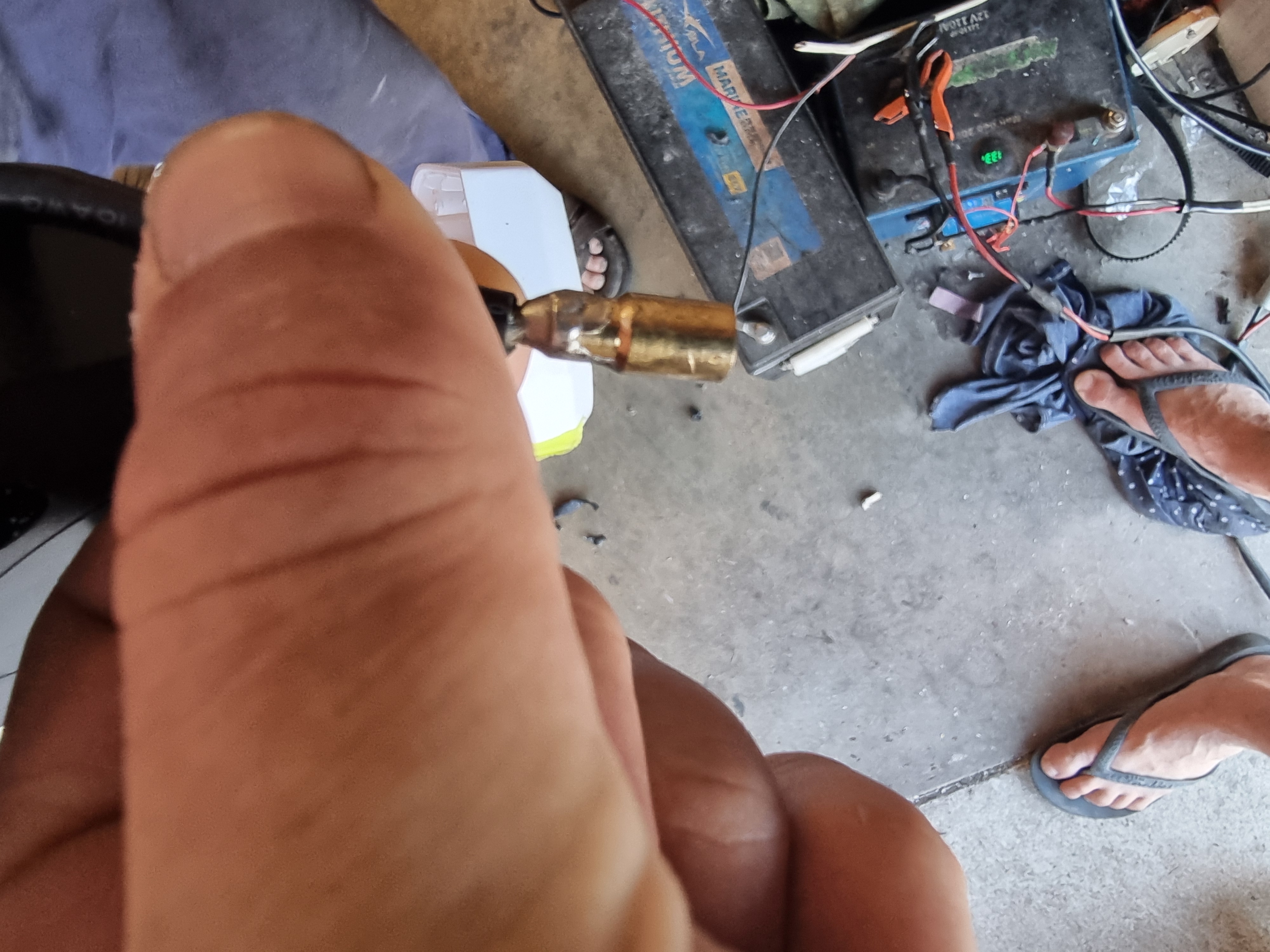
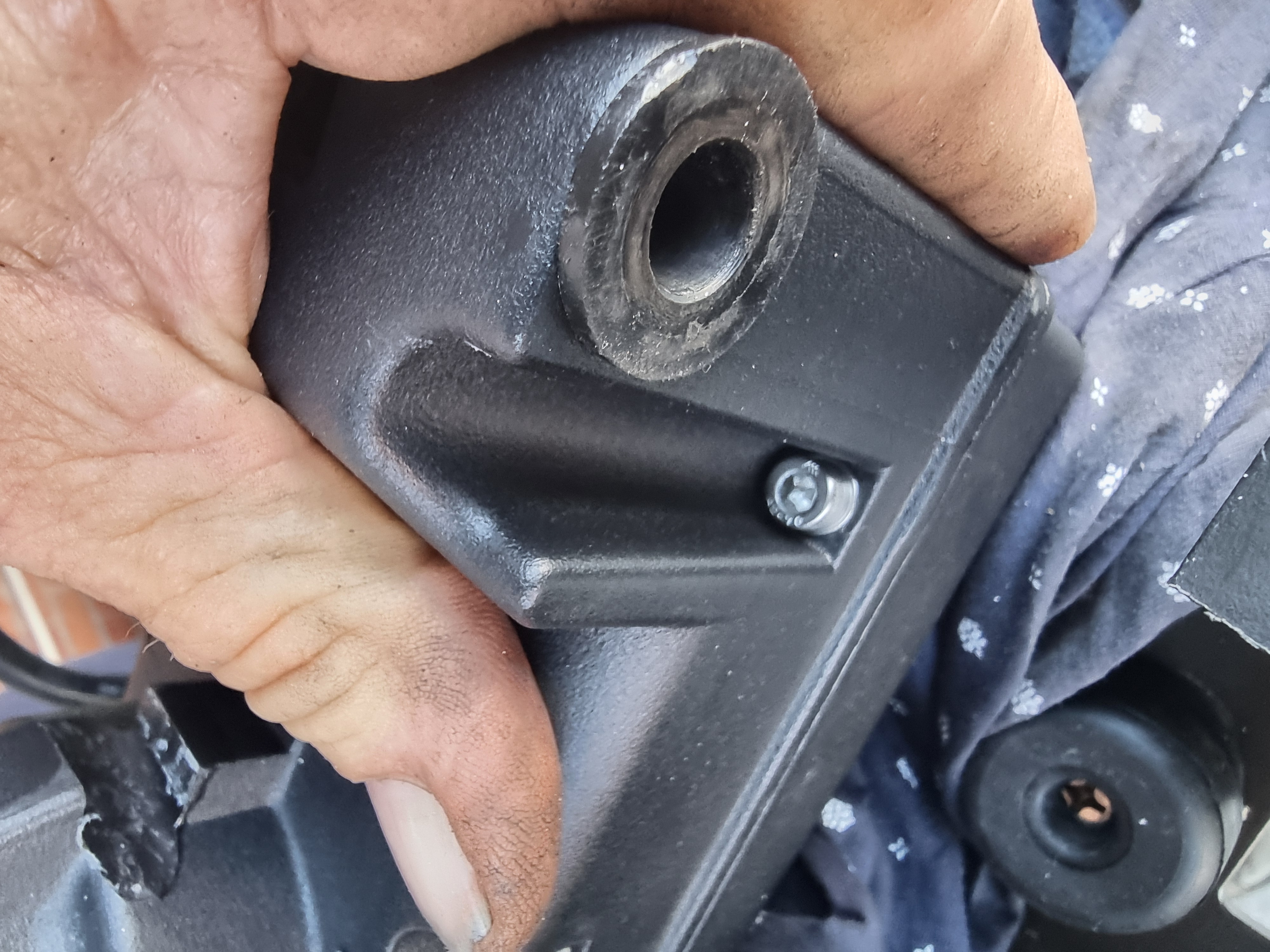
The original pair of plastic bushes was too thin and made from unsuitable material. One broke apart during removal.
We replaced both with substantially stronger bushes.
Both bushes must be upgraded in production.
Factory requirements:
Increase the size and wall thickness of both bushes.
Select a suitable, durable material for both bushes.
Incorporate both stronger bushes into production.
These are inexpensive components. There is no reason to compromise their durability to save a small manufacturing cost.
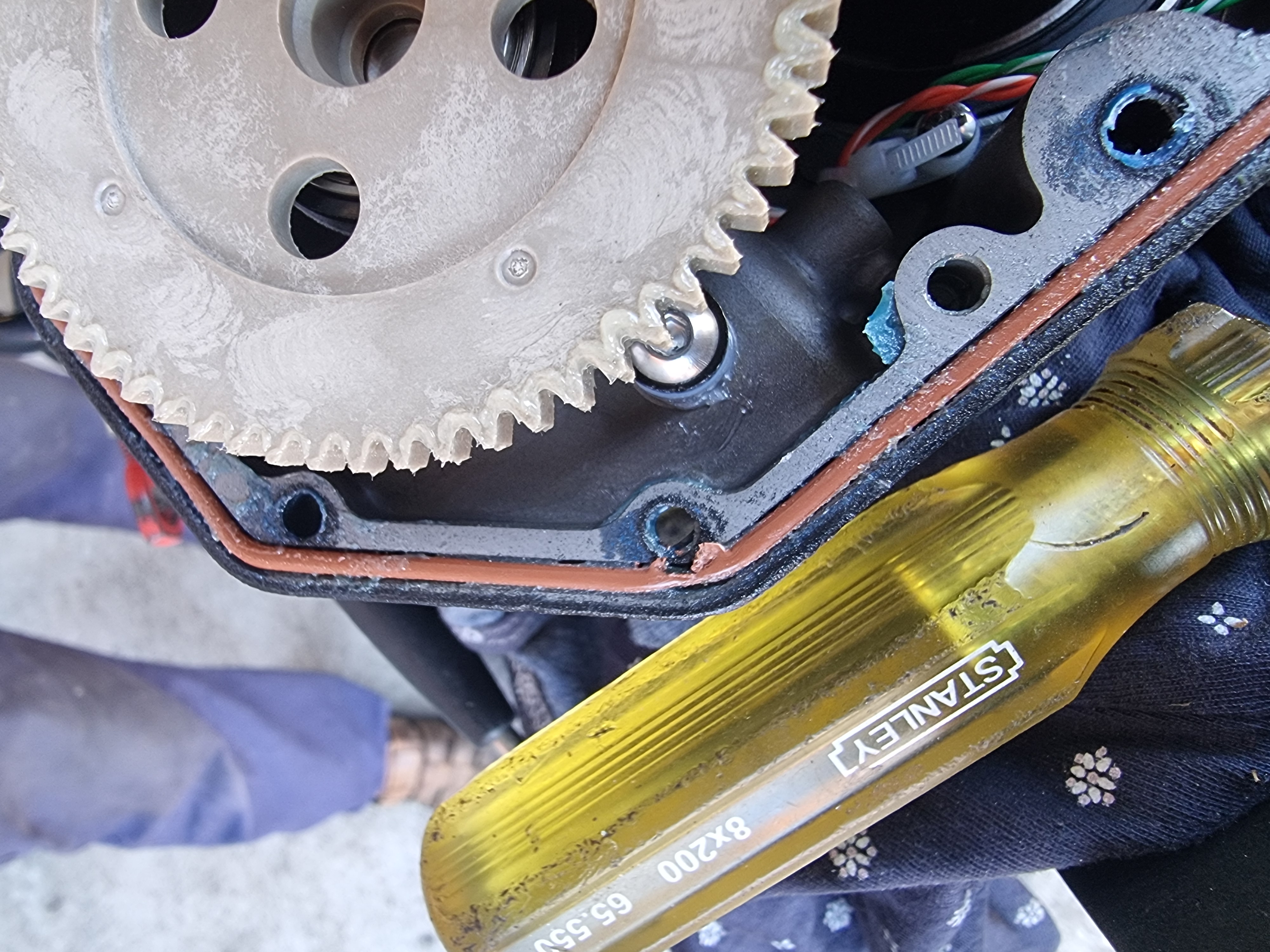
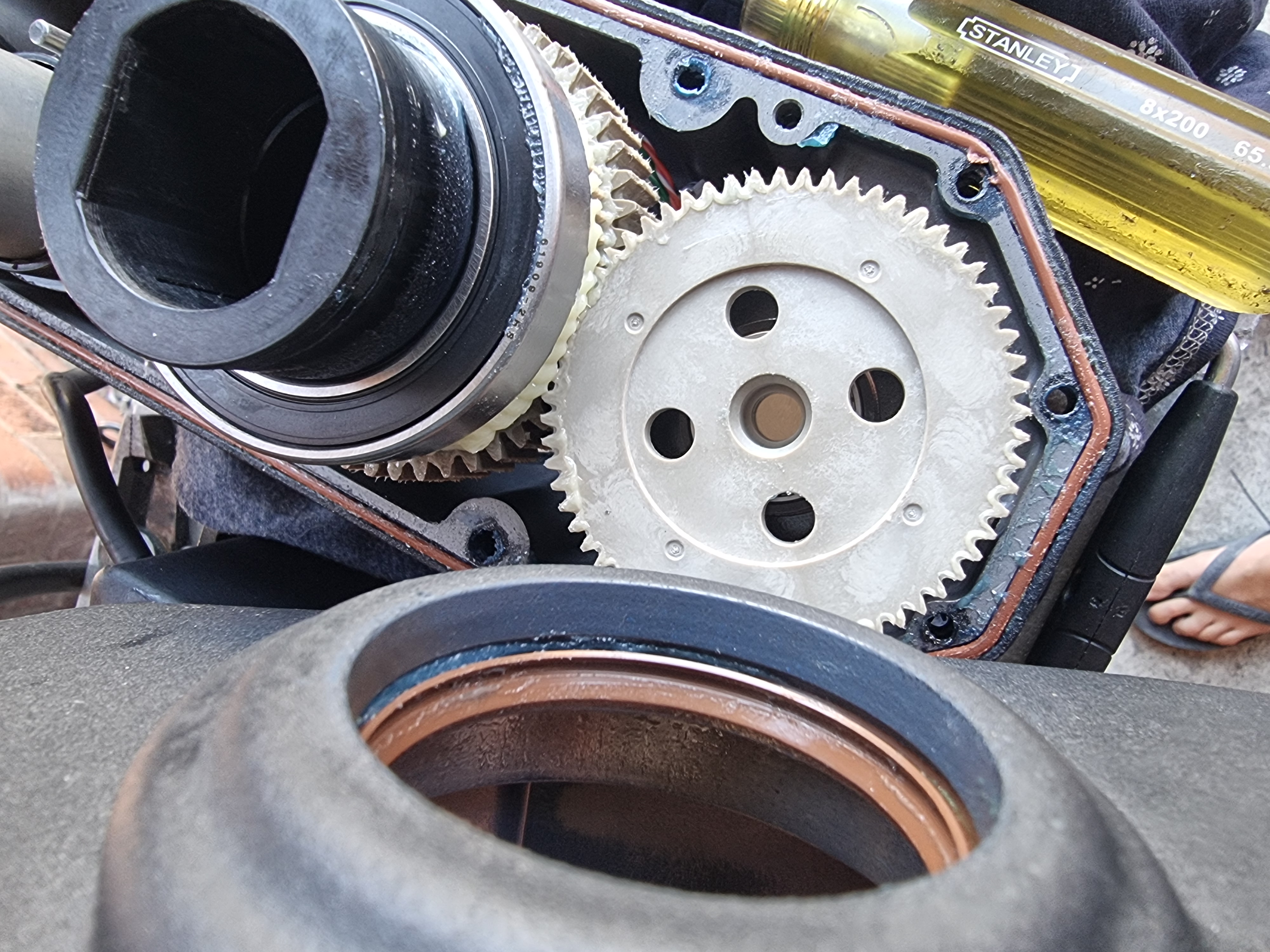
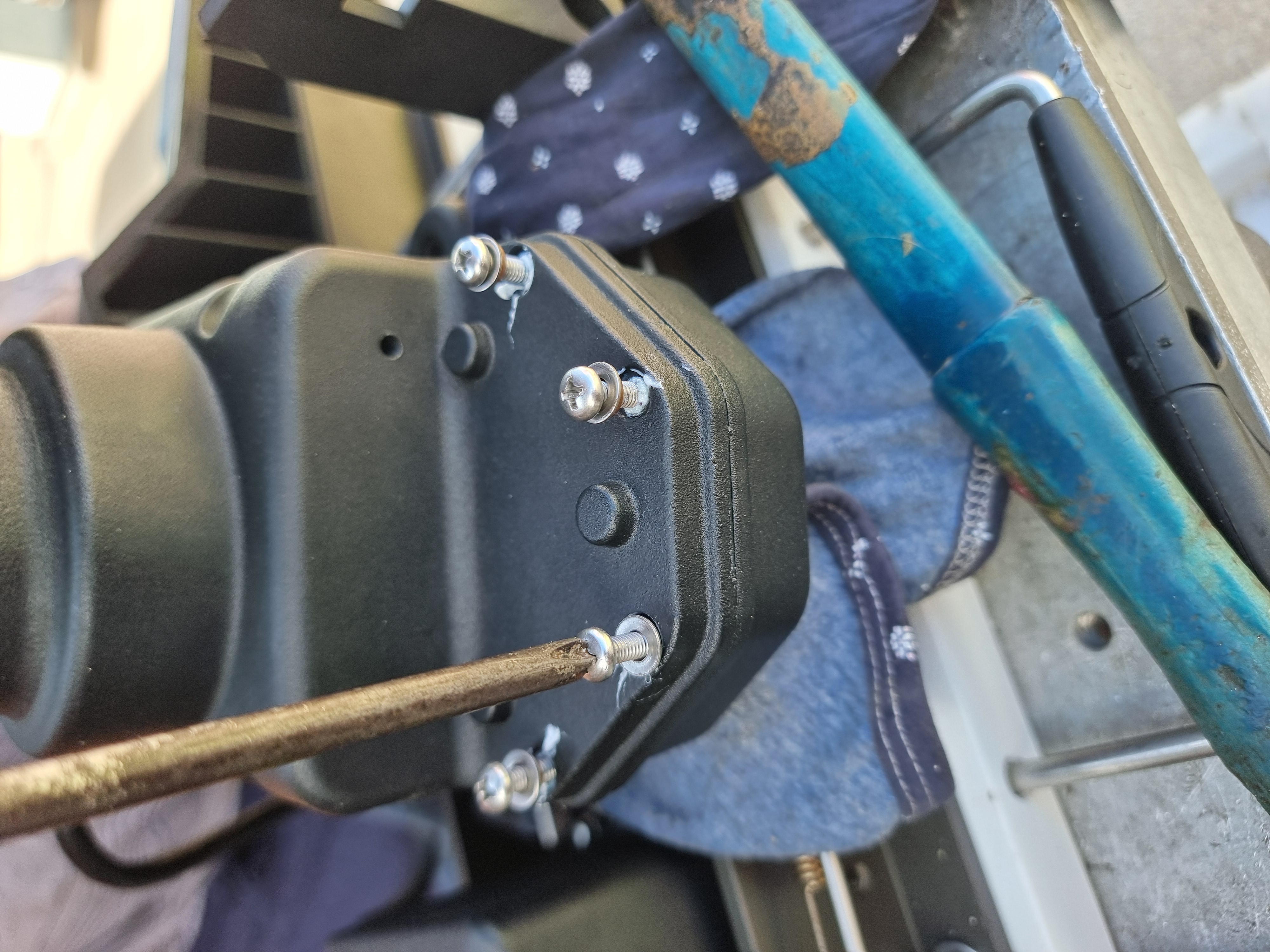
The steering gearbox has the best sealing arrangement we've encountered on an electric trolling motor. The continuous perimeter O-ring and individually sealed casing screws demonstrate exceptional engineering.
However, we found evidence of O-rings being damaged during assembly, and one casing screw uses a brass compression washer instead of the O-ring arrangement used everywhere else.
Preserve the excellent sealing design, improve assembly care, and explain the inconsistent fastener arrangement.
The main perimeter O-ring and screw O-rings should be retained.
Observed issues:
Evidence of damage to the perimeter O-ring during assembly.
Screw O-rings appearing damaged or excessively compressed in their machined seats.
Opening the gearbox may require multiple replacement seals.
Requirements:
Improve assembly care and prevent damage during installation.
Supply replacement gearbox seal kits.
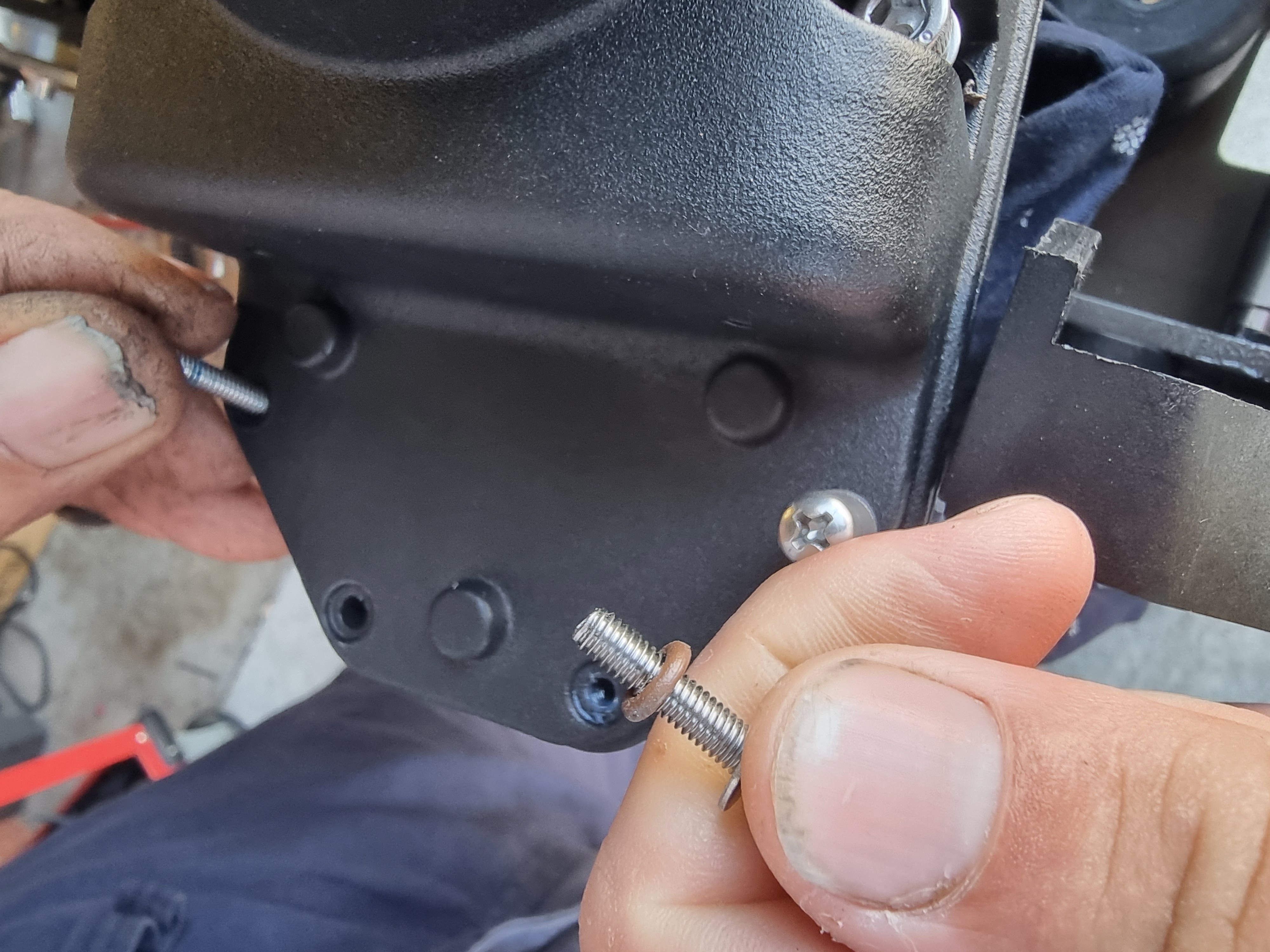
One casing screw differs from the others:
The casing surface is flat instead of having a recessed O-ring seat.
A brass compression washer sits between the painted aluminium casing and stainless steel washer.
The remaining screws use rubber O-rings.
Questions for MakoShark:
Why does this screw use a brass compression washer instead of an O-ring?
Why does this location have a flat surface without an O-ring recess?
Can the same O-ring arrangement used elsewhere be incorporated here?
The brass-to-aluminium interface also introduces a potential corrosion concern in marine conditions.
Preserve the overall sealing design.
The internal steering gearbox is one of MakoShark's greatest engineering achievements.
The combination of gears, sleeves, bearings and output adapter produces remarkably smooth, quiet steering operation. Peter and I have examined and serviced competing steering gearboxes extensively, and this arrangement stands apart from what we've encountered.
This engineering is the foundation of MakoShark's silent operation advantage. Preserve the design and component quality.
Retain the internal drive architecture and component quality.
The silence of the steering gearbox contributes to the product's central selling proposition: silent operation throughout the motor.
The objective is not simply to produce quiet steering. It is to preserve quiet operation across the complete product.
Major Commercial Opportunity — Engineering Development Required
Peter's workshop currently replaces more than 250 Minn Kota steering gearboxes every year. These are existing customers paying to repair failures in one of Australia's leading electric motor brands.
MakoShark has already developed an exceptionally quiet steering gearbox. By modifying its output adapter to fit existing Minn Kota motors, we have an opportunity to replace failed steering assemblies with MakoShark's superior silent technology.
This creates an immediate aftermarket opportunity through Peter's workshop alone, with the potential to expand nationally through our dealer network.
More importantly, Silent Upgrades allows customers to experience MakoShark's technology without purchasing an entirely new motor. Every successful retrofit introduces the MakoShark brand to an existing competitor's customer.
We want MakoShark to develop a compatible output adapter while preserving the existing silent gearbox design.
Explore modifying the output adapter to enable retrofit compatibility with existing Minn Kota motors.
Preserve the existing gears, sleeves, bearings and quiet drive mechanism.
Establish necessary mounting and electrical compatibility for the targeted models.
The existing workload represents an immediate potential supply opportunity, subject to successful engineering development.
After only one month of use, stainless fasteners were already becoming tight in aluminium threads. Apply Tef-Gel or a compatible marine anti-corrosion/anti-seize compound to all threads during assembly; keep it compatible with seals and specified fastening practice.
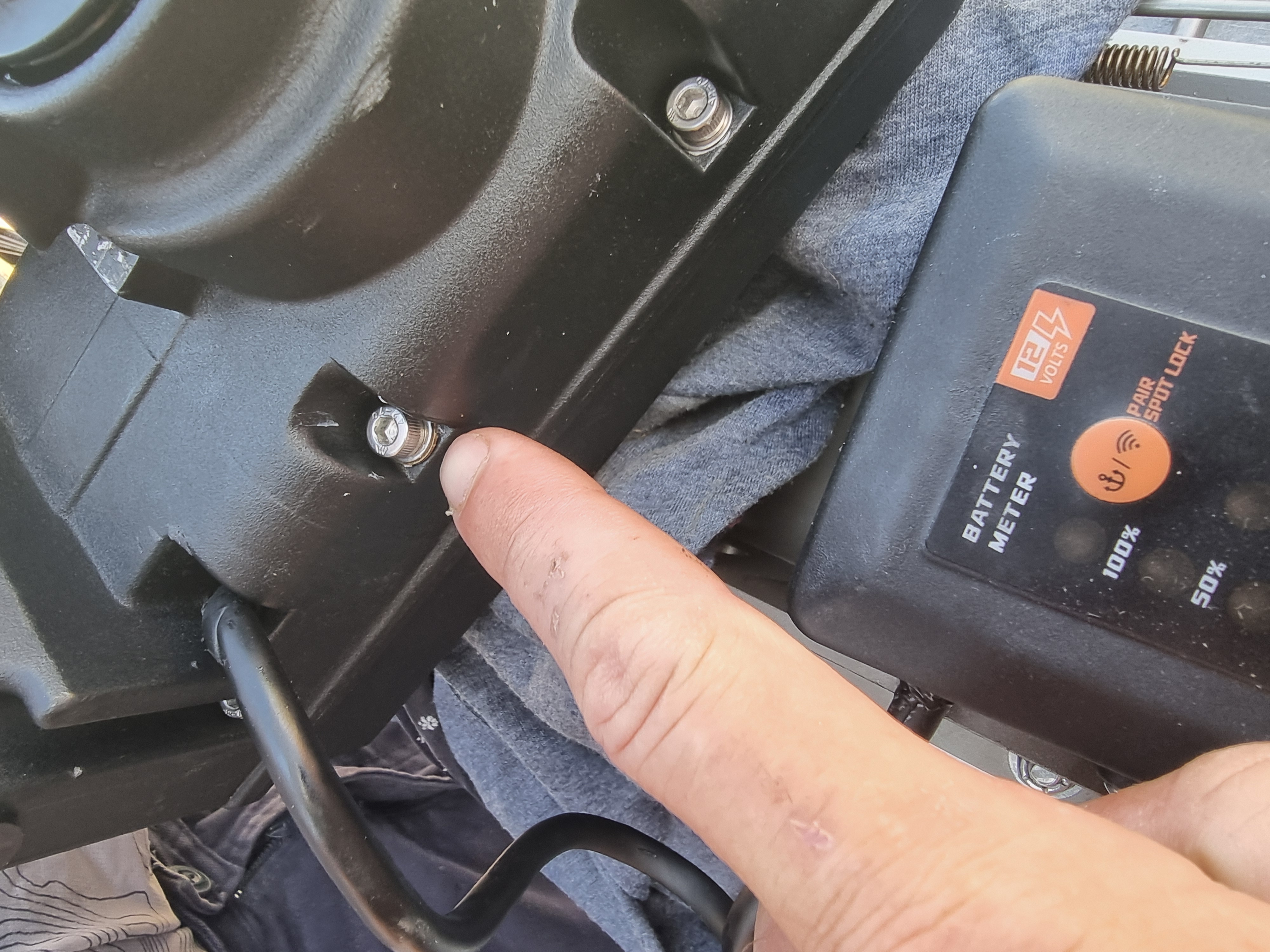
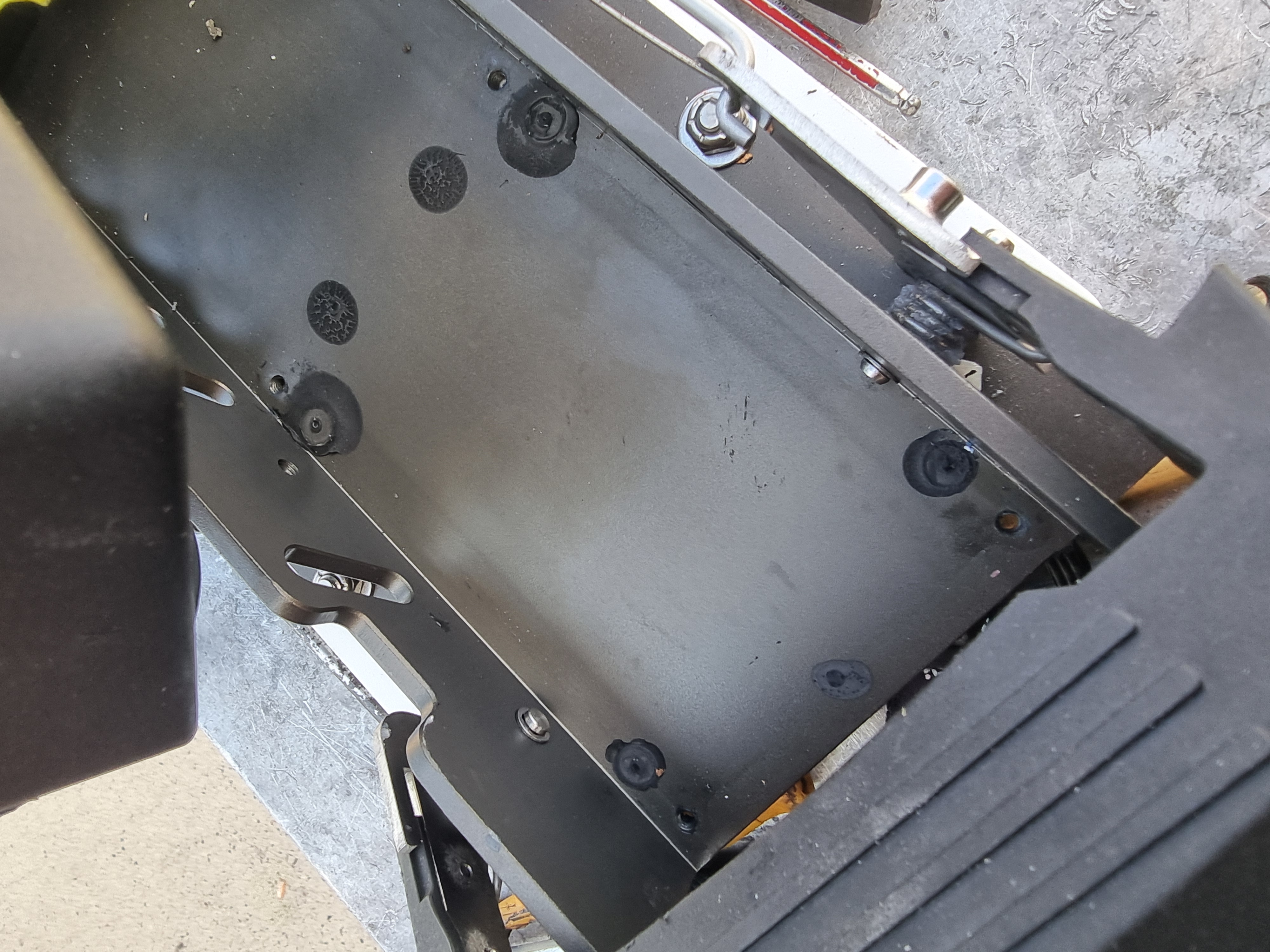
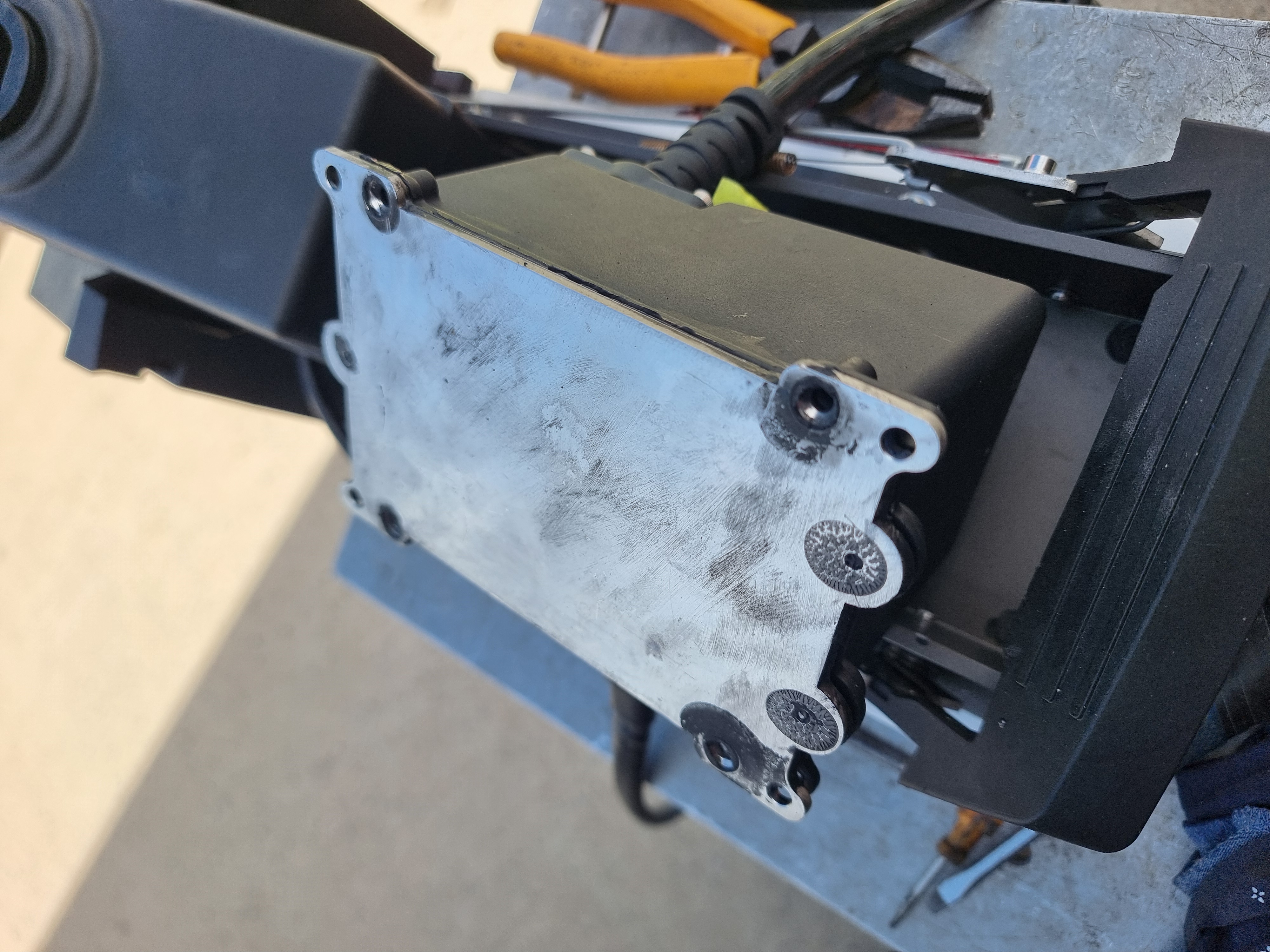
The mainboard enclosure was mounted directly against the anodised aluminium baseplate, with no clearance between the two surfaces.
This arrangement traps saltwater and prevents effective washdown, creating an unnecessary corrosion risk around the mounting surfaces and fasteners.
We manufactured and installed 2 mm plastic spacers to raise the mainboard enclosure above the baseplate, allowing freshwater to wash through and drain freely.
This is a simple modification that eliminates an avoidable corrosion point and protects the long-term serviceability of the assembly. It must be incorporated into production.
Original construction:
Aluminium enclosure mounted directly against aluminium baseplate.
Dabs of compound applied between mating surfaces.
Corner screws securing the components.
No gap for effective washdown or drainage.
Required correction:
Install suitable 2 mm plastic spacers.
Maintain separation between the aluminium surfaces.
Allow effective freshwater washdown and drainage.
Protect the mounting fasteners against corrosion.
Incorporate the completed R&D solution into production.
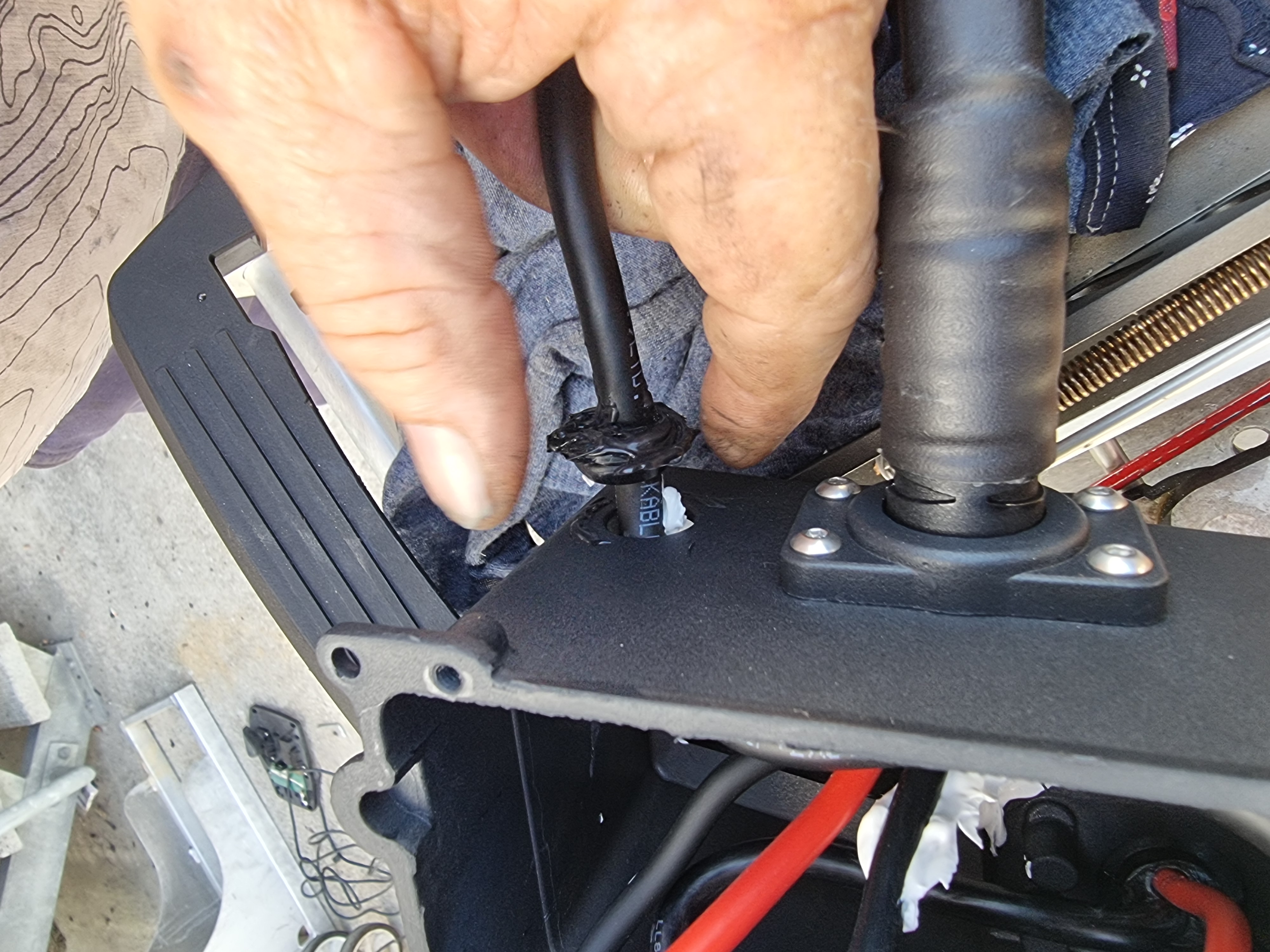
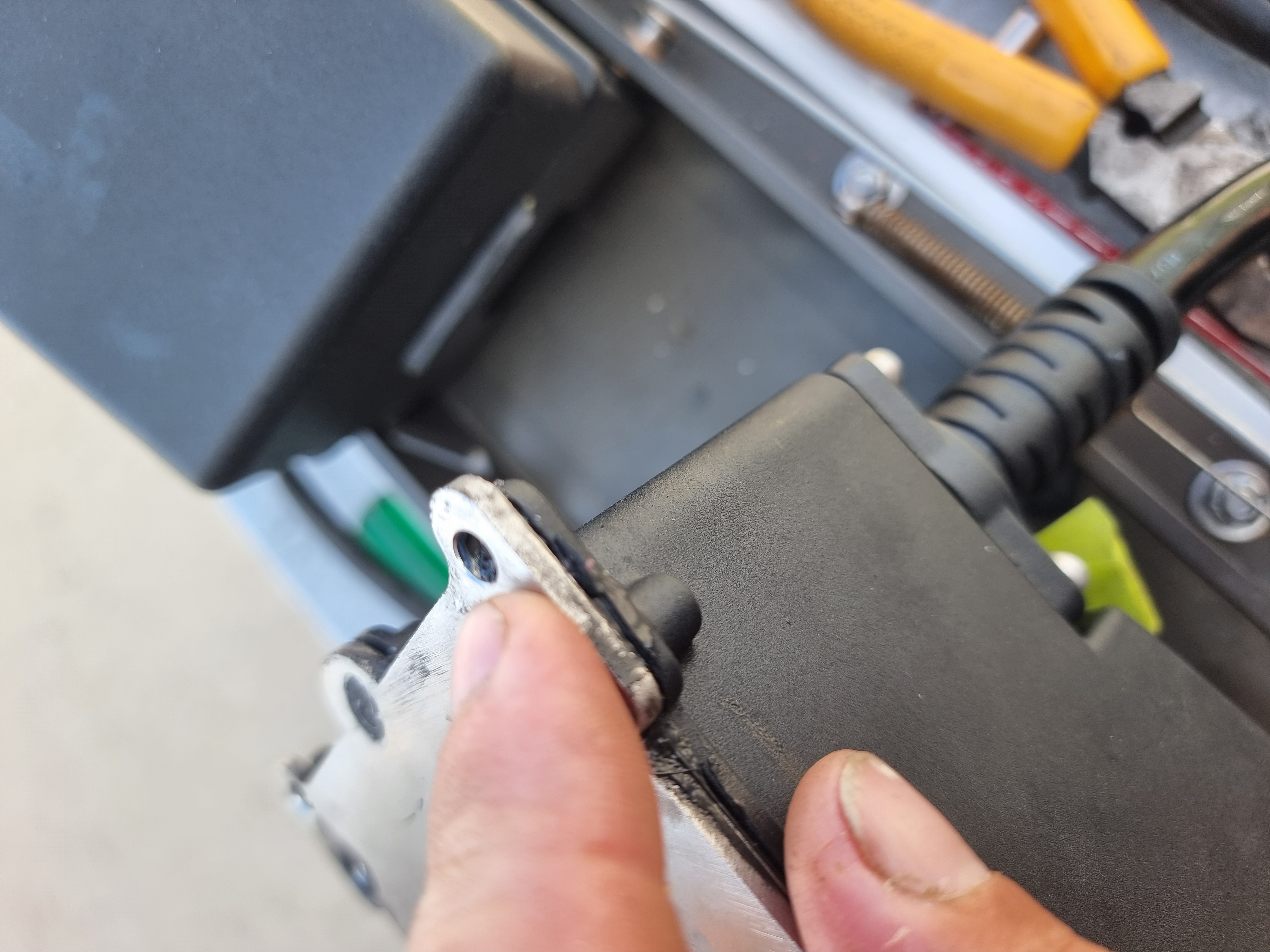
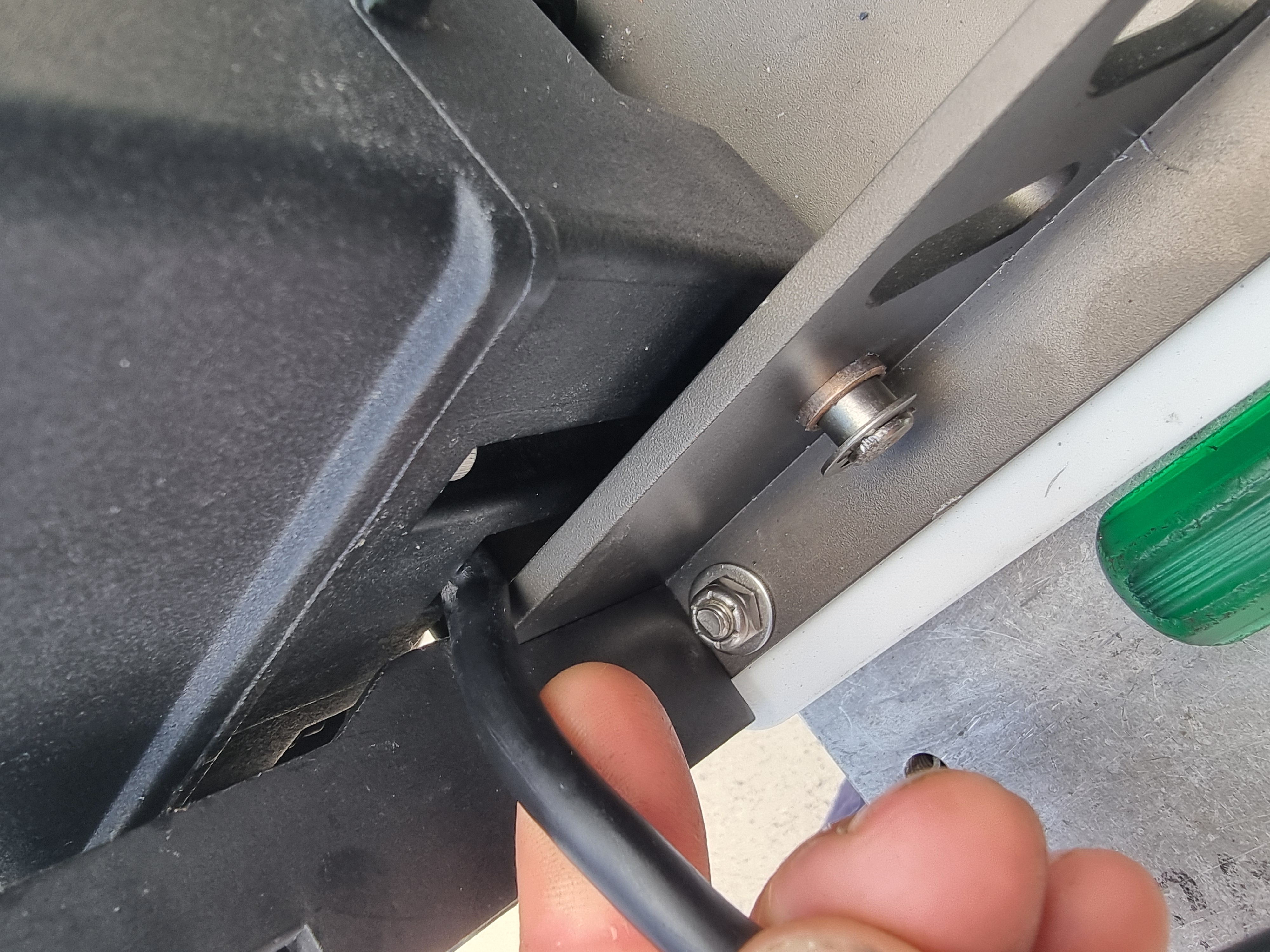
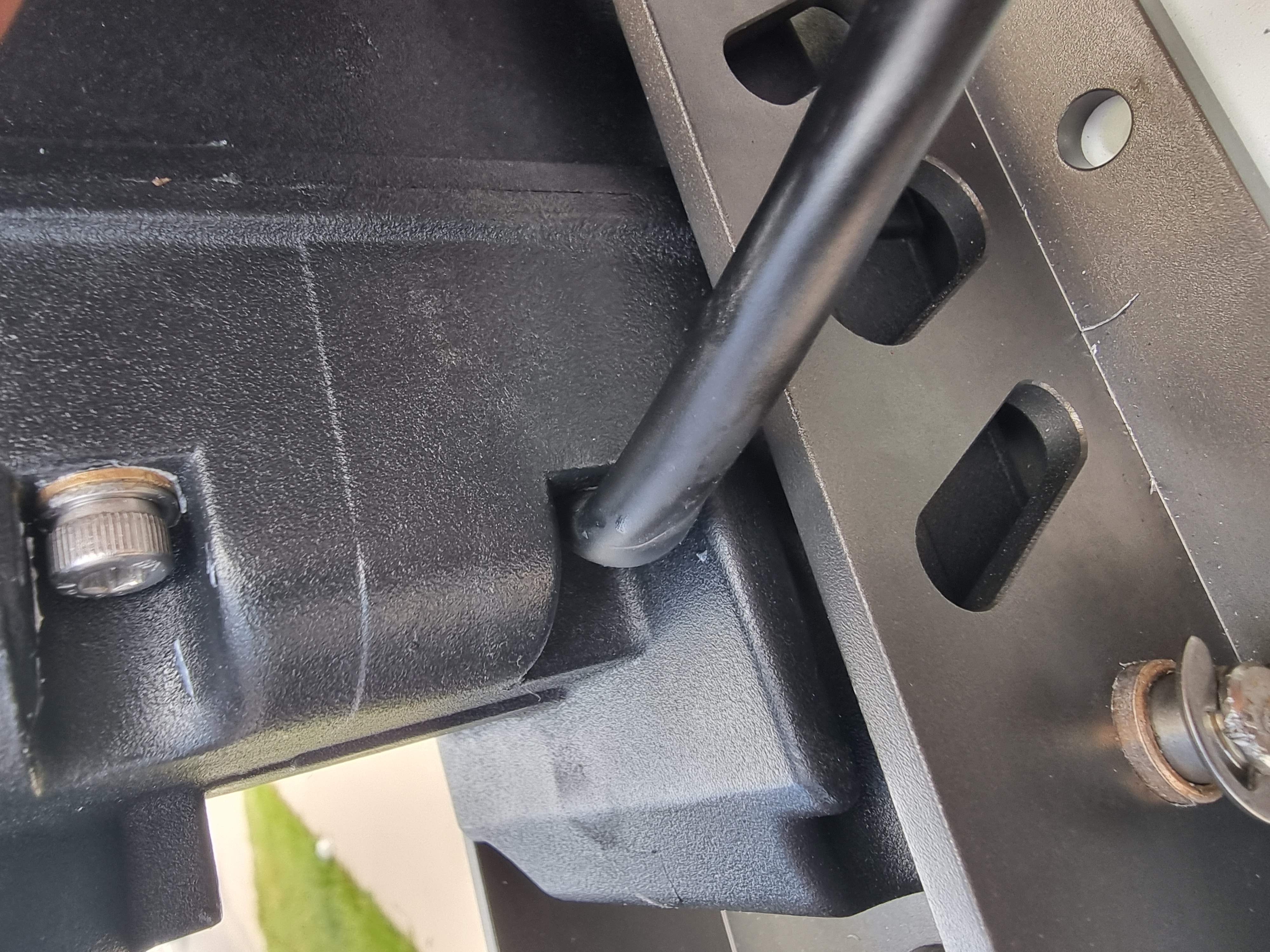
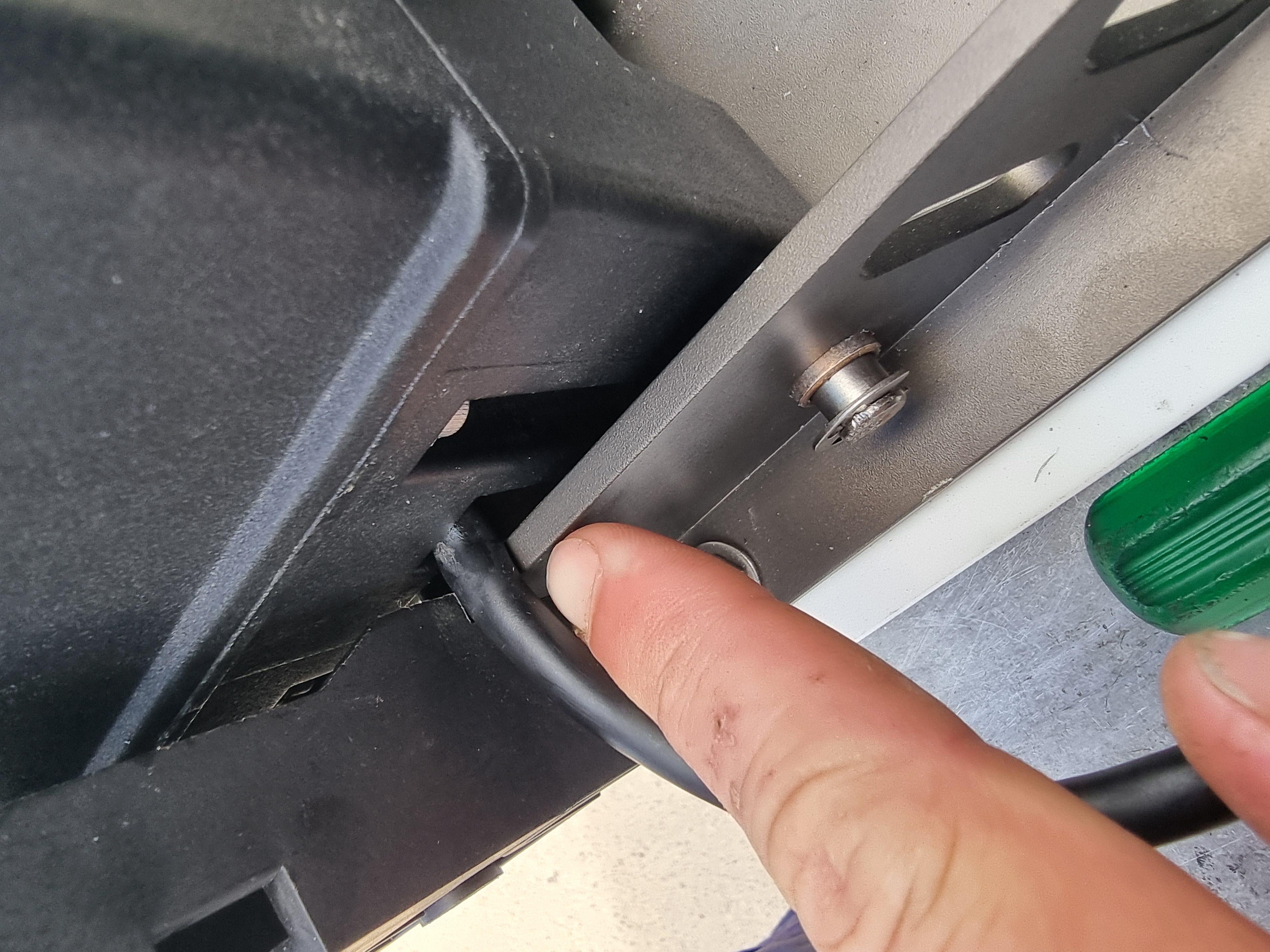
The steering box cable suffered mechanical damage after fewer than 50 deployments.
During deployment and retrieval, the cable repeatedly rubs against the vertical aluminium edge of the motor baseplate. This contact progressively damages the cable insulation, creating a failure point in a component that moves every time the motor is deployed.
This is not a potential long-term issue. The failure has already occurred during our R&D testing.
The factory must correct the cable routing or provide suitable mechanical protection so the cable cannot be damaged during deployment or retrieval.
A motor cannot be considered reliable when normal deployment causes damage to its own wiring.
Change the cable routing or contact geometry to eliminate damaging contact throughout deployment and retrieval.
The cable must not be subjected to abrasion, crushing, pinching or excessive bending.
Maintain independent cable serviceability.
The failure has already occurred during testing. This is not a theoretical long-term concern.
The moulded attachment hole in the plastic motor head is too large for the main shaft tube.
When the stainless steel fastener is tightened, the excessive clearance allows the plastic moulding to distort, causing the attachment structure to fracture.
This failure is caused by an incorrectly sized attachment hole, not by the strength of the plastic itself.
The factory must correct the fit between the motor head and main shaft so the assembly can be securely fastened without damaging the moulding.
The motor head must fit correctly before the retaining fastener is tightened.
Correct the moulded bore-to-shaft fit.
The attachment must fit the tube correctly without relying on the fastener to distort the plastic into position.
The revised arrangement must secure the motor head without cracking the moulding and must remain removable for servicing.
Silent operation is MakoShark's defining brand feature. That silence must extend beyond the electric motor and steering gearbox to the entire mechanical assembly.
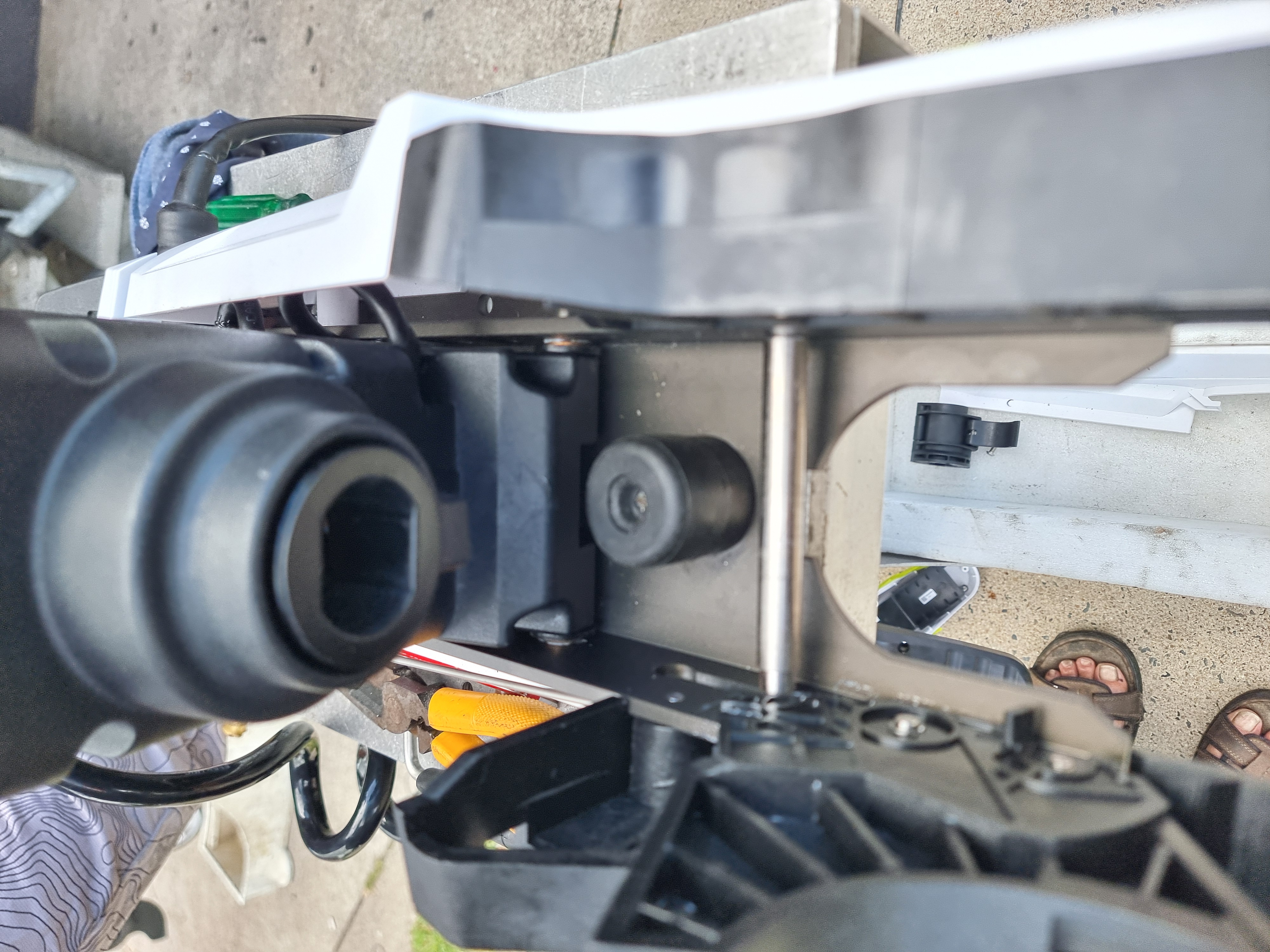
During testing, we identified movement between the steering box locking-pin cutout and the locking pin. This movement causes locking pin bounce, generating mechanical noise that undermines the motor's silent operation.
We designed and installed a rubber bump stop secured with a sleeved bolt. The bump stop maintains positive pressure between the steering box cutout and the locking pin, eliminating the movement and associated noise.
The modification provides another important benefit: it prevents the motor from dropping when the foot pedal is pressed to release the locking pin.
Both improvements are essential. A motor marketed for silent operation cannot produce unnecessary mechanical noise during normal use.
The rubber bump stop maintains positive pressure between the steering box locking-pin cutout and the locking pin.
Factory requirements:
Reproduce the tested rubber bump stop arrangement.
Use the sleeved attachment bolt.
Eliminate locking pin bounce and associated mechanical noise.
Prevent motor drop during foot-pedal disengagement.
Silent operation requires the entire mechanism to remain quiet, not only the gearbox.
MakoShark has demonstrated exceptional engineering in some of the most important components of this motor. Unfortunately, the quality of final assembly does not consistently reflect that engineering.
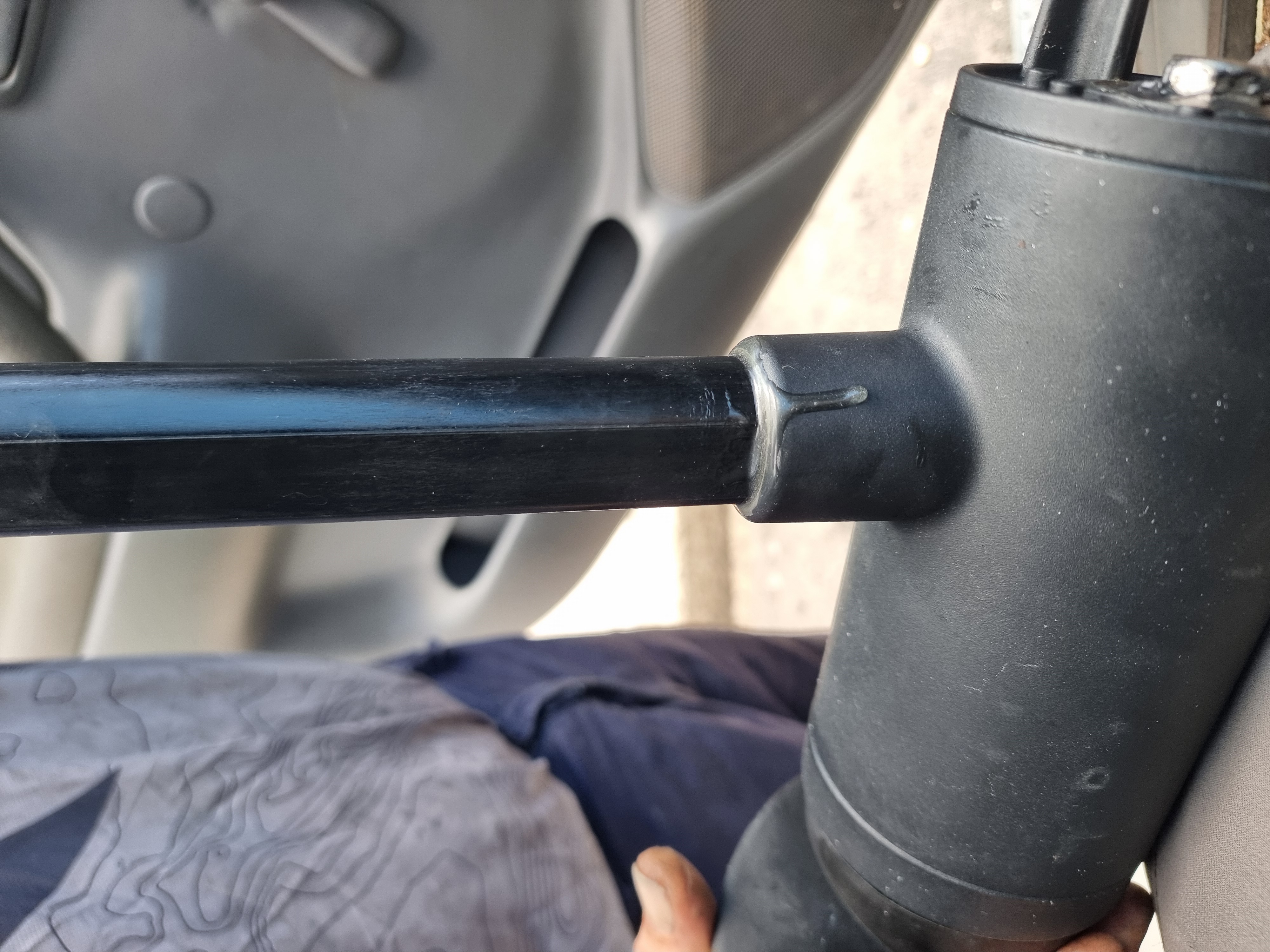
During our teardown, we found excessive sealing compound around cable penetrations, poorly fitted grommets, untidy finishing at the motor shaft junction, and attempts to compensate for poor component fit through additional sealing material.
These are not problems with the fundamental engineering of the motor. They are avoidable workmanship issues introduced during assembly.
Every one of these shortcuts creates an opportunity for failure, warranty expense and damage to the reputation we intend to establish in Australia.
If we want Australian fishermen to recognise MakoShark as a first-tier brand, the manufacturing finish must demonstrate the same care and attention as the engineering inside.
The Spirit of Craftsmanship must be evident in the finished product, not just in its internal design.
Required standards:
Correct component fit before final assembly.
Properly installed cable seals.
Clean and consistent housing junctions.
Controlled application of sealing compound only where required.
No improvised corrections concealed by excessive compound.
Final workmanship inspection before product release.
The expectation is straightforward: assembly quality must reflect the engineering quality already inside the motor.
The original main pivot assembly required improvements to both durability and serviceability.
We installed a stronger brass bush, extended the pivot shaft to accommodate an external circlip, and relocated the circlip from inside the main frame to the outside.
These modifications strengthen the pivot assembly and make servicing significantly easier.
All three changes must be incorporated into production.
Install the upgraded brass bush at the main pivot.
Extend the pivot shaft only enough to accommodate the externally positioned retaining circlip.
Position the circlip outside the main frame.
Previously, the circlip was inside the frame and unnecessarily difficult to service.
The new arrangement must permit straightforward access without dismantling unrelated components.
“MakoShark has already demonstrated the engineering capability to build a first-tier electric motor.
We have seen it in the components, the design and the remarkable silent operation.
What we ask now is that the same pride and attention be carried through every stage of assembly.
We want to bring a first-tier product to Australia, and we believe MakoShark already has what it takes to build one.
The engineering deserves that standard, and our customers will expect it.”
03
What Does Good Look Like?
What should both businesses regard as good after two years and five years?
02
In Two Years
All mandatory R&D corrections implemented in the production motor.
Silent operation is the defining characteristic of the complete motor.
Recognition established within the northern barramundi fishing community.
Eight active service-capable dealers.
200 new motor sales per year as the Year 2 planning target.
250 retrofit steering boxes per year as the Year 2 target, subject to compatibility development.
Dealers accept trade-ins, rebuild suitable motors with MakoShark parts and resell them.
Parts inventory, practical warranty support and documented factory feedback in place.
05
In Five Years
Recognised as a credible first-tier Australian electric trolling motor brand.
Quiet, reliable and repairable become the recognised product characteristics.
A national network of trained, service-capable dealers.
Target annual run rate of 2,000 new motors as a planning ambition, not a guaranteed forecast.
Established trade-in, reconditioning and second-hand programmes using MakoShark parts.
Compatible third-party steering-box retrofits operating as an established aftermarket offering.
Regular Australian failure intelligence informing factory improvements.
A reciprocal long-term manufacturer–Australian partner relationship.
Proposed Year 2 annual targets
8Service-capable dealers
200New motors / year
250Retrofit steering boxes / year
450Total new motors + retrofit boxes / year
25New motors / dealer / year
“In two years, Australian fishermen know who MakoShark is. In five years, they know why they trust it.”
 original-20261101_075838.jpg
 original-20261101_092050.jpg
 original-20261101_092001.jpg
 original-20261101_094703.jpg
 original-20261101_080439.jpg
 original-20261101_081143.jpg
 original-20261101_082123.jpg
 original-20261101_085329.jpg
 original-20261101_082302.jpg
 original-20261101_084321.jpg
 original-20261101_085320.jpg
 original-20261101_092216.jpg
 original-20261101_092213.jpg
 original-20261101_092209.jpg
 original-20261101_092517.jpg
 original-20261101_092531.jpg
 original-20261101_093153.jpg
 original-20261101_093155.jpg
 original-20261101_093727.jpg
 original-20261101_095304.jpg
 original-20261101_080213.jpg
 original-20261101_081802.jpg
 original-20261101_092515.jpg